
🥋 About me
I am Qianxin Qu, a Ph.D. student starting in Fall 2026 at the Hong Kong University of Science and Technology (Guangzhou), advised by Prof. Ying Cui. My research lies at the intersection of spatial intelligence and autonomous driving.
Before starting my Ph.D., I was a Research Assistant at the School of Vehicle and Mobility, Tsinghua University, mentored by Prof. Xinyu Zhang and Prof. Jun Li. I earned my B.Eng. in Computer Science and Technology from China University of Mining and Technology (CUMTB) in 2023, where I was guided by Prof. Jiajing Li. From 2022 to 2023, I also participated in joint training at Tsinghua University.
🦄 Research
My research focuses on spatial intelligence for multi-agent autonomous systems. I am interested in how connected vehicles and infrastructure can perceive, align, and reason about shared 3D environments. My previous work has centered on multi-agent traffic scenarios, especially V2X / CAV settings, where the key challenge is to turn heterogeneous observations into a reliable shared spatial representation. These projects have involved spatio-temporal alignment, calibration, localization, and cooperative perception.
Looking ahead, I hope to explore how 3D vision, Visual Language Models (VLMs), and 3D reconstruction foundation models can support spatial intelligence for multi-agent autonomous systems.
I also have a broader interest in Agentic AI, particularly spatial reasoning for physical-world agents and human-agent research workflows.
My current research interests include:
- Spatial Intelligence: 3D vision, reconstruction foundation models, and geometry-aware representations;
- V2X & Autonomous Driving: cooperative perception, connected autonomous systems;
- Agentic AI: spatial reasoning for physical-world agents and human-agent research workflows.
📝 Publications
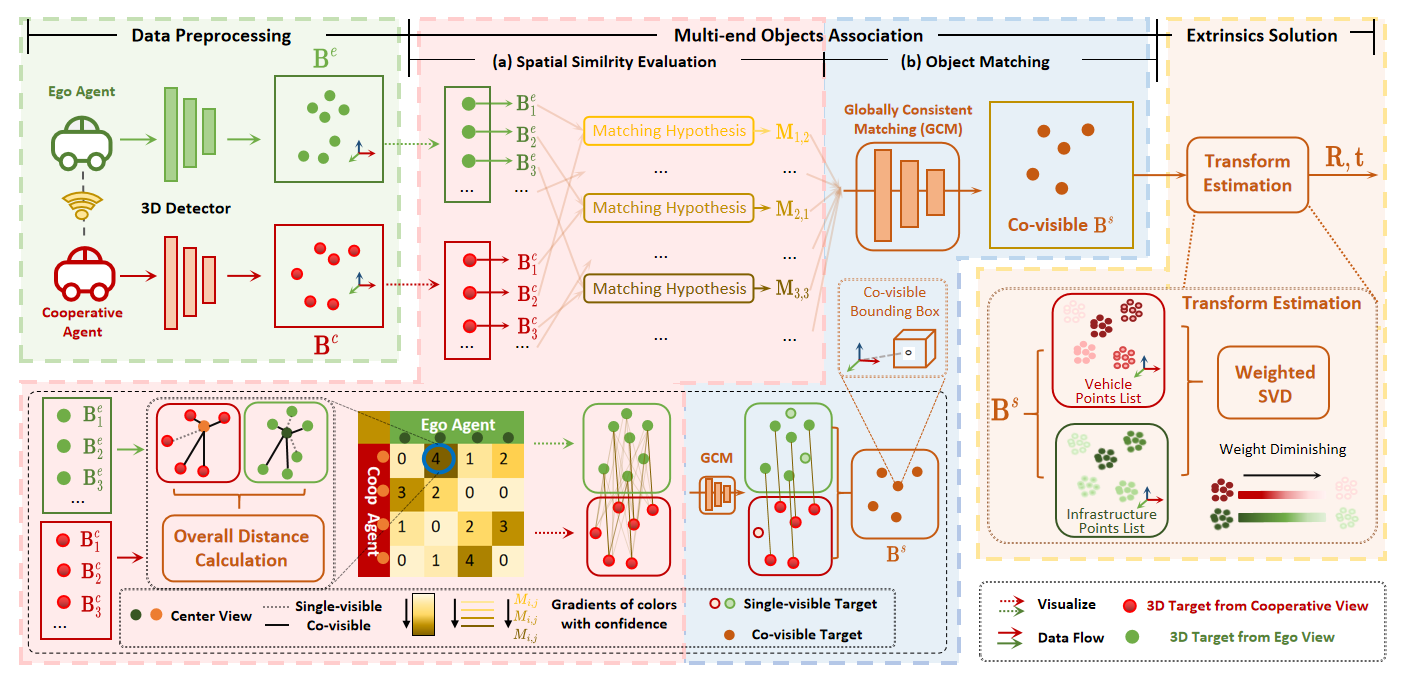
V2X-Reg++: A Real-time Global Registration Method for Multi-End Sensing System in Urban Intersections
Accepted by IEEE Transactions on Intelligent Transportation Systems (T-ITS, JCR Q1, IF:8.4)



tl;dr: We argue that current spatial alignment methods, which require an initial pose, are impractical for real-world Vehicle-to-Everything (V2X) cooperative perception. To address this limitation, we propose an online global registration algorithm that uses perception priors to align heterogeneous sensors in real-time.
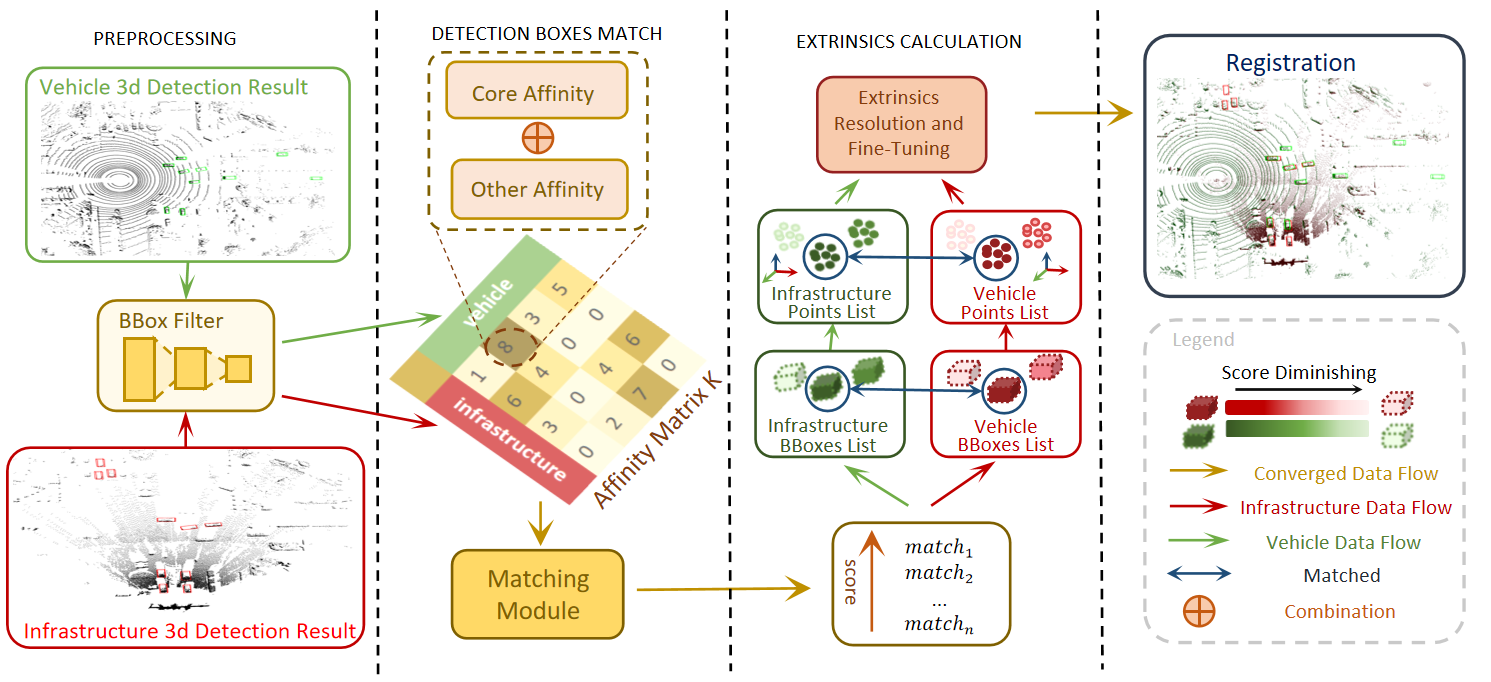
V2I-Calib: A Novel Calibration Approach for Collaborative Vehicle and Infrastructure LiDAR Systems
IEEE/RSJ International Conference on Intelligent Robots and Systems(IROS), 2024


tl;dr: We re-examine the evolution of sensor calibration in V2I scenarios, highlighting the shift in demand from static, one-time calibration to dynamic, continuous alignment. We then propose an online, global registration of cross-source point cloud for algorithm for V2I.
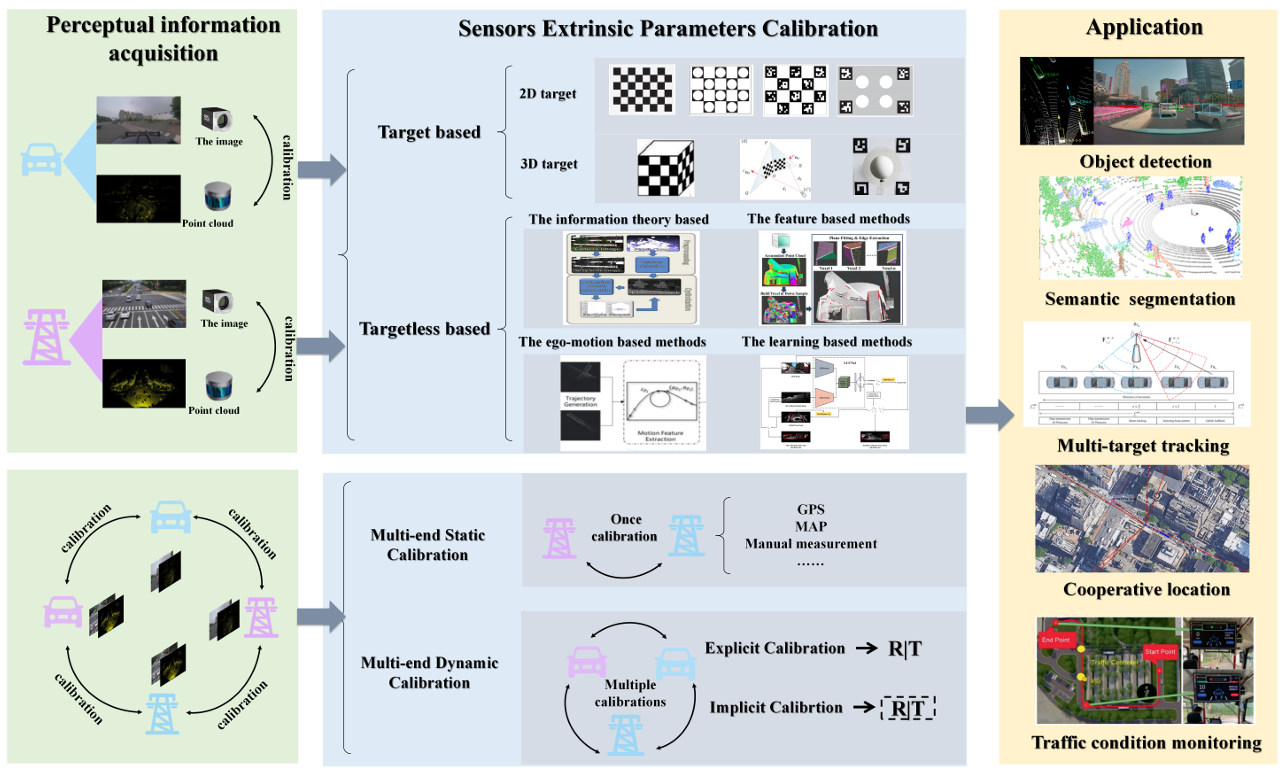
Cooperative Visual-LiDAR Extrinsic Calibration Technology for Intersection Vehicle-Infrastructure: A review
IEEE Internet of Things Journal, 2025 (IoT-J, JCR Q1, IF:8.9)

tl;dr: This survey systematically organizes the evolution of sensor calibration from single-vehicle to cooperative intelligence.
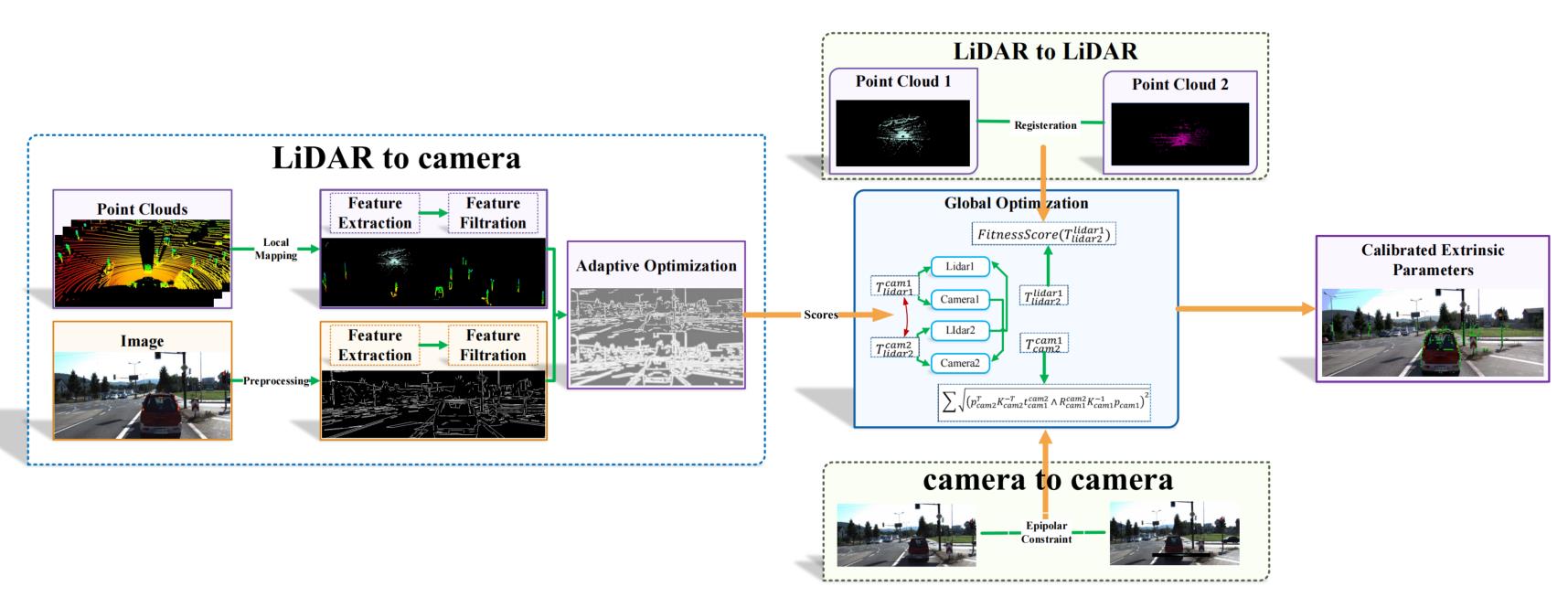
Automated Extrinsic Calibration of Multi-Cameras and LiDAR
IEEE Transactions on Instrumentation and Measurement, 2023 (T-IM, JCR Q1, IF:5.9, Student First Author)



tl;dr: We propose an online, line-feature-based method to address extrinsic parameter drift in Camera-LiDAR systems during operation. Its real-world effectiveness was validated with industry partners (Meituan, MOGOX, and SAIC Motor).
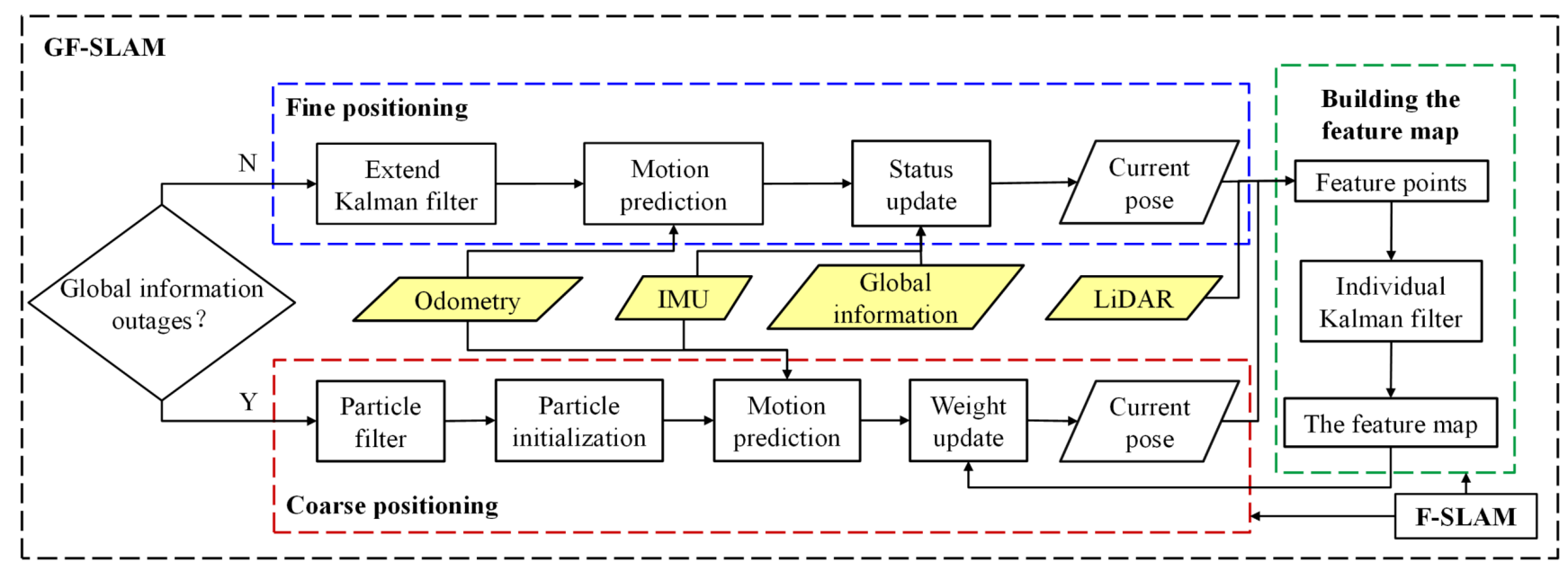
GF-SLAM: A Novel Hybrid Localization Method Incorporating Global and Arc Features
IEEE Transactions on Automation Science and Engineering, 2024(T-ASE, JCR Q1, IF=6.4)
tl;dr: To address cumulative error in mapping for agricultural scenarios, we propose a robot localization method that fuses global and local environmental features. I was responsible for liaising with the Academy of Agricultural Sciences and implementing the real-world validation.